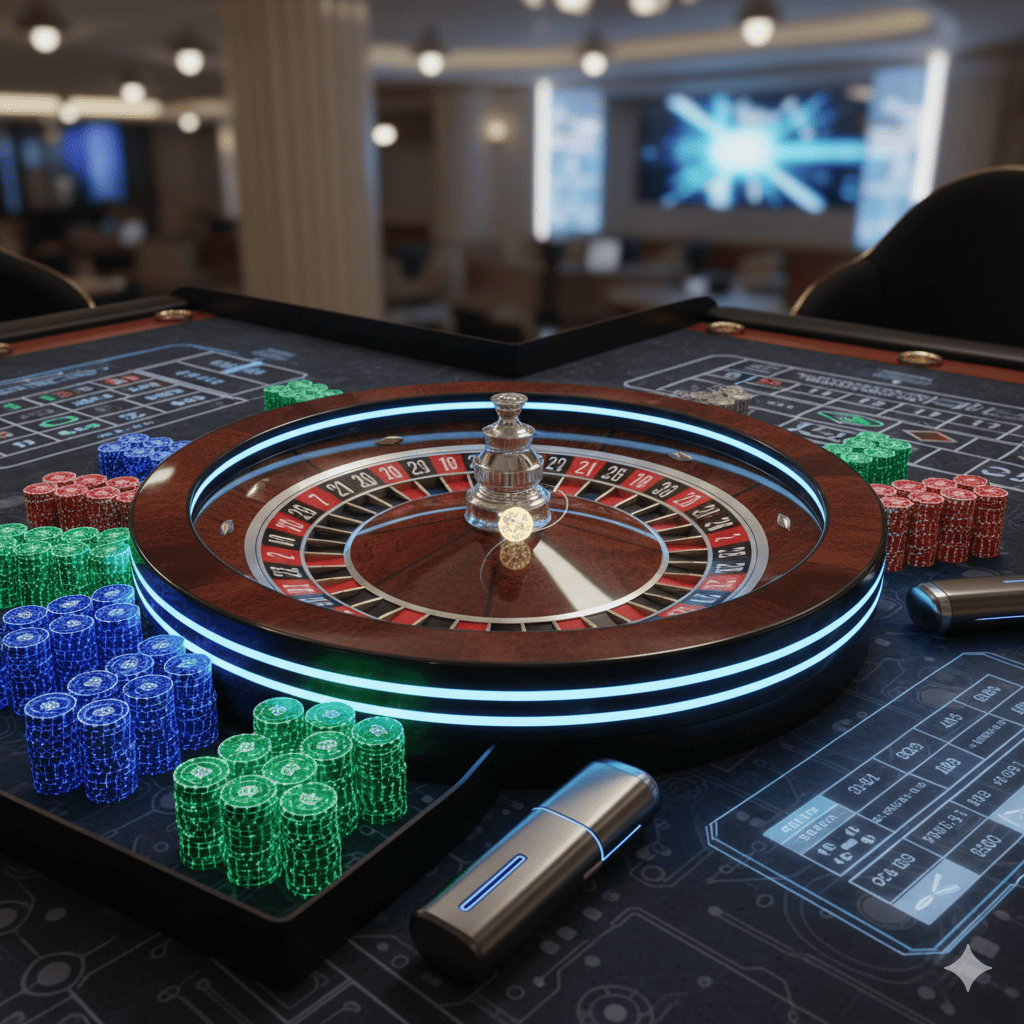
I am sitting in the server room of a major data centre just outside of Toronto, watching the digital heartbeat of thousands of players. Each blip on the monitor represents a decision, a bet, a thrill. For years, the gatekeeper to this world was a simple string of characters. A password. It was a clumsy, forgettable, and easily stolen key that caused more headaches for my support team than any game glitch ever could. Those days are ending. We are witnessing a seismic shift in how we identify you, moving from what you know to who you are. The adoption of the biometric casino login has transformed the landscape of Canadian igaming, creating a fortress that is as invisible as it is impenetrable.
The Death of the Credential
Let us be honest with each other. Passwords are a relic of a bygone era. I see the logs. I see the failed attempts. I see the sheer number of people who use “Password123” or their dog’s name followed by their birth year. It is terrifying. In an industry where we handle millions of dollars in transactions and hold sensitive personal data, relying on a user’s memory is a liability we can no longer afford.
The shift began slowly. It started with the banking sector. When Canadians got used to logging into their TD or RBC apps with a thumbprint, the expectation was set. Why should accessing your casino account be any harder than checking your chequing balance? But for us, it is not just about convenience. It is about survival. The black market for stolen credentials is vast. Credential stuffing attacks, where bots try millions of stolen email and password combinations from other data breaches against our login gates, are a daily reality. A password is a static secret that can be shared. Your face, your fingerprint, and the unique rhythm of your heartbeat are not.
The Anatomy of Physical Biometrics
When you open our app on your iPhone or Android device and the camera flashes to scan your face, you are engaging with the first layer of our new defence. This is physical biometrics. It seems simple. You look, it unlocks. However, the technology occurring in that millisecond is a marvel of modern engineering.
We do not store a photo of your face. If we did, that database would be the ultimate target for hackers. Instead, we rely on the secure enclave of your device. Your phone maps the topography of your face using thousands of invisible infrared dots. It converts that topography into a mathematical hash. When you log in, the phone compares the current scan to the stored hash. If they match, it sends a cryptographic token to my server saying “This is the authorised user.” I never see your biometric data. I only see the proof that you are you.
This distinction is vital for privacy. In Canada, we operate under strict regulations like PIPEDA (Personal Information Protection and Electronic Documents Act) and the specific standards set by Alcohol and Gaming Commission of Ontario (AGCO). We cannot hoard your biological data. We leverage the hardware you already own to verify you locally. This decentralised approach means that even if my servers were compromised, the attackers would find no fingerprints to steal.
The Invisible Guardian: Behavioral Biometrics
This is where I get excited. Physical biometrics are great, but they are active. You have to touch the sensor. You have to look at the screen. What happens after you log in? What if you log in, put the phone down, and your underage nephew picks it up to spin the slots?
Enter behavioral biometrics. This is the true future, and it is already running in the background of our platform. We are no longer just looking at your face. We are analyzing how you interact with your device.
Every human being has a unique digital signature. It is defined by the flight time between your keystrokes. It is defined by the angle at which you hold your smartphone. It is defined by the surface area of your thumb when you tap the “Spin” button. I can tell if you are right-handed or left-handed. I can tell if you are lying in bed or walking down the street based on the gyroscope data.
We build a profile of “You.” If a bot takes over your account, it will tap with inhuman precision. If a fraudster logs in with your stolen credentials, they will navigate the menus differently than you do. You might go straight to the live dealer blackjack; the fraudster goes straight to the withdrawal page.
When the behavior deviates from the baseline, our system flags it. We do not ban you immediately. We simply introduce friction. We ask for that face scan again. We ask for a 2FA code. We step up the security because the invisible biometric layer sensed a disturbance. This is continuous authentication. You are being verified with every tap, swipe, and scroll, ensuring that the person who started the session is the same person finishing it.
The Fraud Prevention Ecosystem
As a representative of the house, I must protect the house. Bonus abuse is a plague. We call it “gnoming.” This is where a player creates dozens of fake accounts to claim the welcome bonus multiple times. In the password era, this was easy. They would buy a batch of stolen identities and use a VPN.
Biometrics destroys this business model. You can buy a thousand stolen credit card numbers on the dark web. You cannot buy a thousand different faces. By requiring a biometric check at the registration or first withdrawal stage, we ensure that one human equals one account.
If a sophisticated fraudster tries to use a high-resolution video of a victim to pass a facial scan, we use liveness detection. We ask the user to blink, or turn their head. Even more advanced, we analyze the reflection of light on the skin to distinguish between living tissue and an LED screen. We look for the micro-movements of breathing.
This creates a safer ecosystem for everyone. When fraud decreases, our losses decrease. When our losses decrease, we can offer better odds, larger bonuses, and faster withdrawals to the legitimate players. It is a symbiotic relationship where security drives value.
The Responsible Gaming Revolution
There is a darker side to gambling that we must address. Addiction. For years, responsible gaming tools were reactive. A player had to realize they had a problem and hit the self-exclusion button. Often, that realization came too late.
Biometric data offers us a proactive tool. We are currently testing systems that can detect emotional states. This is sensitive territory, and we treat it with the utmost ethical caution. But consider the possibilities.
When a player is chasing losses, their behavior changes. They tap the screen harder. Their typing becomes erratic. On devices with health integration, we can potentially see heart rate spikes. If our behavioral analysis detects that a player is entering a “tilt” state-high stress, rapid betting, erratic navigation-we can intervene.
We can pause the game. We can send a gentle notification: “You seem stressed. Why not take a break?” We can dynamically lower deposit limits. Instead of waiting for the player to crash, the biometric feedback loop allows the system to act as a safety net. This is not about stopping the fun. It is about ensuring the fun remains fun and does not descend into compulsion.
The Ontario Effect and Regulatory Compliance
Canada is a unique market. The launch of the regulated market in Ontario changed everything. The AGCO is one of the strictest regulators in the world. They demand that we know our customers.
In the grey market days, “Know Your Customer” (KYC) meant sending a photo of your driver’s license and a utility bill to a generic email address and waiting three days. It was slow, insecure, and frustrating.
Biometrics allows for “Instant KYC.” We can compare your live facial scan with the photo on your government ID in seconds. We can verify that the person holding the phone is the person on the ID. This satisfies the regulator’s requirement for identity verification without the friction of manual paperwork.
Furthermore, geolocation is a massive part of Canadian compliance. I need to know you are in Ontario to let you play on my Ontario license. If you cross the border into Manitoba, the law changes. Biometrics helps here too. By tying the login to a specific, trusted device with a verified biometric profile, it becomes much harder for players to spoof their location using VPNs. We trust the device, and the device trusts you.
Privacy and the Canadian Trust
I know what you are thinking. “This sounds like Big Brother.” I hear this concern in every focus group. Canadians value their privacy. You trust your bank, but do you trust a casino?
Trust is the currency of our future. That is why we lean so heavily on the “Zero Knowledge” architecture I mentioned earlier. I do not want your raw data. It is toxic waste to me. If I hold a database of a million fingerprints, I am a target for every state-sponsored hacker group in the world.
By keeping the biometric data on your device, I absolve myself of that risk. I am essentially outsourcing the security to Apple and Google, who spend billions on R&D.
We also use homomorphic encryption. This is a fancy mathematical term that means we can perform calculations on encrypted data without decrypting it. We can verify you are over 19 without ever actually seeing your date of birth. We can verify you are the account holder without seeing your face.
Transparency is key. We must explain this to you in plain English, not legalese. When we ask for biometric permission, we explicitly state that we are not harvesting your DNA. We are creating a digital key that only you possess.
The User Experience: Frictionless Flow
Let us step away from security and talk about luxury. The modern casino player is impatient. If my app takes ten seconds to load, you are gone. You will switch to Netflix or TikTok.
Passwords cause friction. You forget them. You have to reset them. You have to wait for the email link. It disrupts the dopamine loop.
Biometric login is frictionless. You tap the icon. The app opens. You are in. It feels like magic. This seamless entry removes the barrier between the desire to play and the action of playing.
This extends to payments. In Canada, Interac is king. Integrating biometric authorization with Interac deposits means you can fund your account with a glance. No credit card numbers to type. No CVV codes to hunt for. It is a fluid stream of action.
However, we must balance this frictionlessness with safety. If it is too easy to deposit, is it too easy to lose money? This is where the “friction on demand” comes in. We make logging in easy. We make small deposits easy. But if you try to deposit $5,000 at 3 AM? That is when the system wakes up and demands a re-authentication. It forces a moment of reflection. “Are you sure?” That micro-pause can be enough to break a compulsive cycle.
The Future: Beyond the Fingerprint
What does 2026 look like? We are already prototyping the next generation of biometric tech.
Voice recognition is improving rapidly. Imagine sitting on your couch and saying, “Place fifty dollars on the Leafs to win.” The app recognizes your unique vocal print, verifies the bet, and places it. No hands required.
We are looking at vein mapping. The pattern of blood vessels in your hand is complex and impossible to replicate. Sensors are becoming cheap enough to integrate into mouse pads or controllers.
We are looking at heartbeat authentication. A wristband (like an Apple Watch or Fitbit) detects your unique cardiac rhythm (ECG). As long as you are wearing the band, the casino knows it is you. If you take the band off, the session locks. This is “persistent authentication.” It solves the problem of you logging in and then walking away from your computer.
We are even exploring “intent analysis.” By using AI to analyze eye-tracking data (from front-facing cameras), we can see where you are looking on the screen. Are you confused? Are you looking for the help button? Are you fixated on the jackpot counter? We can tailor the interface in real-time to your cognitive state.
The Barrier to Entry
Of course, there are challenges. Not everyone has a $1,000 smartphone. We cannot alienate the player using an older device. We must maintain legacy login systems (passwords) for a while longer, but we treat those accounts as “high risk.” They are subject to stricter limits and more manual checks.
There is also the issue of bias. Early facial recognition algorithms struggled with certain skin tones. As a Canadian company, diversity is our reality. We rigorously test our vendors to ensure the AI works equally well for a First Nations elder in Thunder Bay as it does for a recent immigrant in Vancouver. We cannot allow security to become discriminatory.
The Insider’s Verdict
I have worked in this industry for two decades. I remember taking bets over the telephone. I remember the first clunky websites. I remember the download-only clients.
The transition to biometric security is the most significant leap forward I have ever seen. It solves the three biggest problems we face: fraud, friction, and compliance.
It changes the relationship between the player and the house. It moves us from an adversarial stance-where I build walls to keep you out and you try to climb them-to a cooperative stance. Your device vouches for you.
For the Canadian player, this means a safer environment. It means that if your phone is stolen, your bankroll is safe. It means no more panicked calls to support because you locked yourself out on a Friday night.
But deeper than that, it signifies the maturation of the industry. We are no longer the Wild West. We are a sophisticated, tech-driven sector that operates on the cutting edge of cybersecurity.
So, the next time your casino app asks to scan your face, do not view it as an invasion. View it as a handshake. A secure, encrypted, biological handshake that ensures the game remains fair, the money remains yours, and the experience remains purely about the thrill of the play.
The password is dead. Long live the player.
Navigating the Transition
Transitioning our user base is not instantaneous. We use incentives. “Enable FaceID and get 50 free spins.” It works. Humans follow the path of least resistance. Once a player experiences the speed of a biometric login, they never go back to typing.
We also have to educate. We publish blog posts, produce videos, and train our support staff to explain the technology. We have to demystify the black box. When a player asks, “Do you have my fingerprint?” the answer must be a clear, confident, and technically accurate “No.”
The outliers remain. The paranoid. The tech-averse. We accommodate them, but the gap in user experience is widening. The biometric player gets instant withdrawals because we trust their identity. The password player gets manual review. Slowly but surely, the ecosystem is pushing everyone toward the biological key.
The Role of Artificial Intelligence
I cannot talk about biometrics without talking about the brain behind the eyes. AI is the engine that makes this possible. The machine learning models that power our behavioral analysis are constantly learning.
They learn your habits. They learn that you usually bet on soccer on Saturday mornings. They learn that you never play poker. If suddenly your account is betting heavy on Texas Hold’em at 4 AM on a Tuesday, the AI knows that is statistically improbable for “You.”
This AI is not static. It evolves. As fraudsters develop new tools-like AI-driven bots that try to mimic human mouse movements-our AI trains against them. It is an arms race. A digital cold war played out in milliseconds on servers across the country.
But unlike the old days, where we reacted to fraud after the money was gone, AI allows us to predict it. We stop the transaction before it happens. We lock the account before the damage is done. This is the power of combining biological identity with machine intelligence.
Conclusion
We are standing at the precipice of a passwordless world. In Canada, where we pride ourselves on a regulated, safe gambling environment, this technology is the gold standard.
It protects the vulnerable. It empowers the legitimate. It strangles the criminal.
As a representative of this casino, my goal is to provide entertainment. I want you to feel the rush of the win, not the stress of the login. Biometrics allows us to fade into the background. The security becomes invisible, and when security is invisible, it is at its most effective.
You are the key. You always have been. We just finally built the lock that fits you. So go ahead. Look at your screen. Scan your thumb. The game is waiting, and for the first time in history, we know for sure that it is really you playing it.